
2024, June 3
Share this articleAlso, librarians from various regions of Kazakhstan took part in the conference.
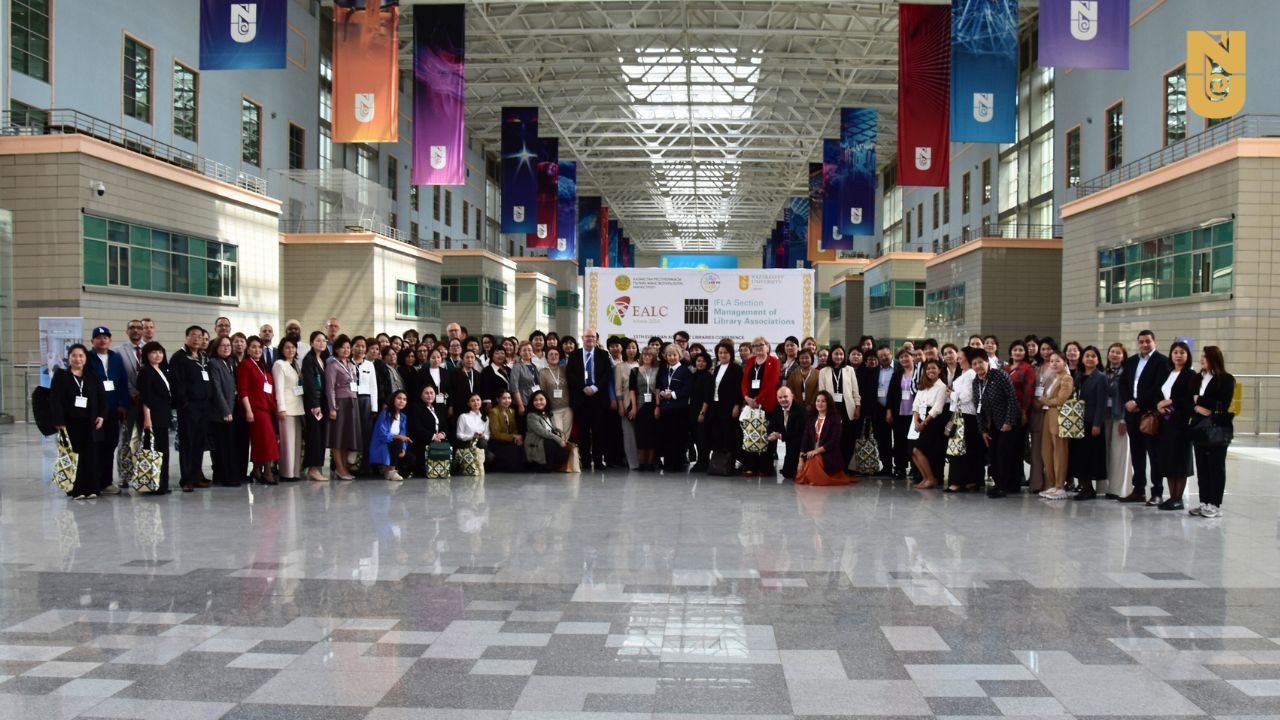
The integration of AI technologies, a unified automated library system, and the exploration of cultural heritage through special collections were among the topics discussed by participants of the XIII Eurasian Academic Libraries Conference held at NU in collaboration with the International Federation of Library Associations and Institutions (IFLA).
The conference brought together over 200 participants, including experts from the USA, Canada, China, Russia, Finland, Malaysia, Portugal, and other countries. Librarians from various regions of Kazakhstan also participated. The event was supported by the Ministry of Education and Science and the Association of Libraries of Higher Educational Institutions of the Republic of Kazakhstan.
The Eurasian Academic Libraries Conference is held annually. The theme of this year's conference was "Connect, Collaborate, Create: Advancing Library Associations and Partnerships to Future-Proof Our Profession".
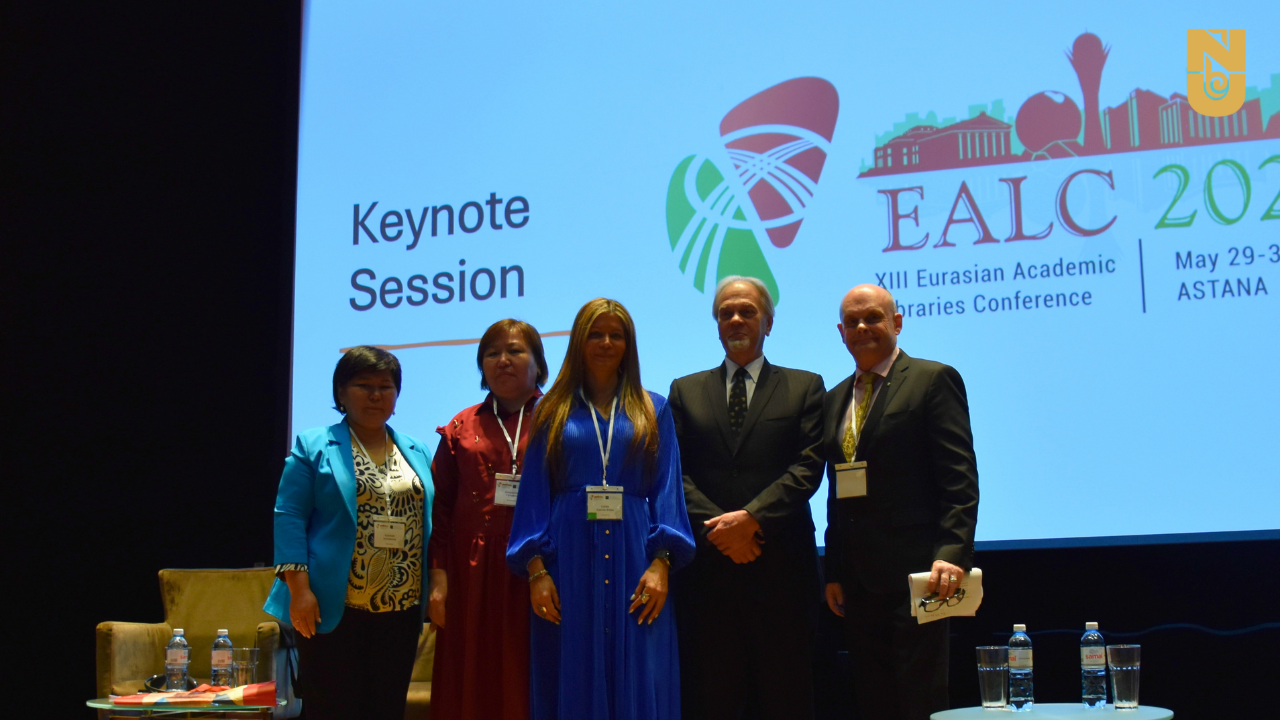
Opening the conference, NU Library Director Jerald Cavanagh emphasized the importance of attracting great minds in library science and information management to Kazakhstan: "We are at a crucial juncture in our history, as significant opportunities and challenges arise with the development of artificial intelligence. The library sphere becomes a key factor in this transitional period."
Deputy Chairman of the Committee of Higher and Postgraduate Education of the Ministry of Science and Education of the Republic of Kazakhstan, Gulzhan Jarasova, discussed the issues facing Kazakhstani libraries, including low salaries for specialists and the need to elevate the status of libraries: "Currently, libraries are legally defined as cultural organizations. However, it is important to recognize that every library serves an educational and enlightening purpose. Therefore, it is crucial to acknowledge this fact and change the status of libraries from cultural to educational, which will attract a different level of support."
In turn, the Chair of the Management of Library Associations of the IFLA, Loida Garcia-Febo, shared the section's achievements worldwide and wished the conference participants fruitful discussions: "Many years ago, our section held a conference in Panama, on the other side of the world. And today, we are here in Central Asia, in Astana. Members of the IFLA Management Section are very active abroad because our goal is to strengthen ties between library associations worldwide. May this conference catalyze meaningful dialogue, productive cooperation, and transformative change."
The first day of the conference proved to be productive. Sherri Aldis, Director of the UN Regional Information Center in Brussels, discussed library collaboration with the UN, while Gaziza Nurgalieva, Director of the National Academic Library of the Republic of Kazakhstan, shared information about the Large Language Model (LLM) project in the Kazakh language and the role of libraries in its development. IT specialist and librarian Nurzhan Zholdybalinov then introduced participants to the Unified Automated Library Information System, its advantages, and prospects.
On the second day, Huzefa Ghadiali from India addressed the topic of exploring cultural heritage through special collections, while the Secretary General of the Finland Library Association shared insights into strategic planning in this field. On the third day, experts from the USA and China shared their knowledge and experience. The concluding speaker was Aliya Ospanova, Chairwoman of the Management Board of JSC Center for International Programs.
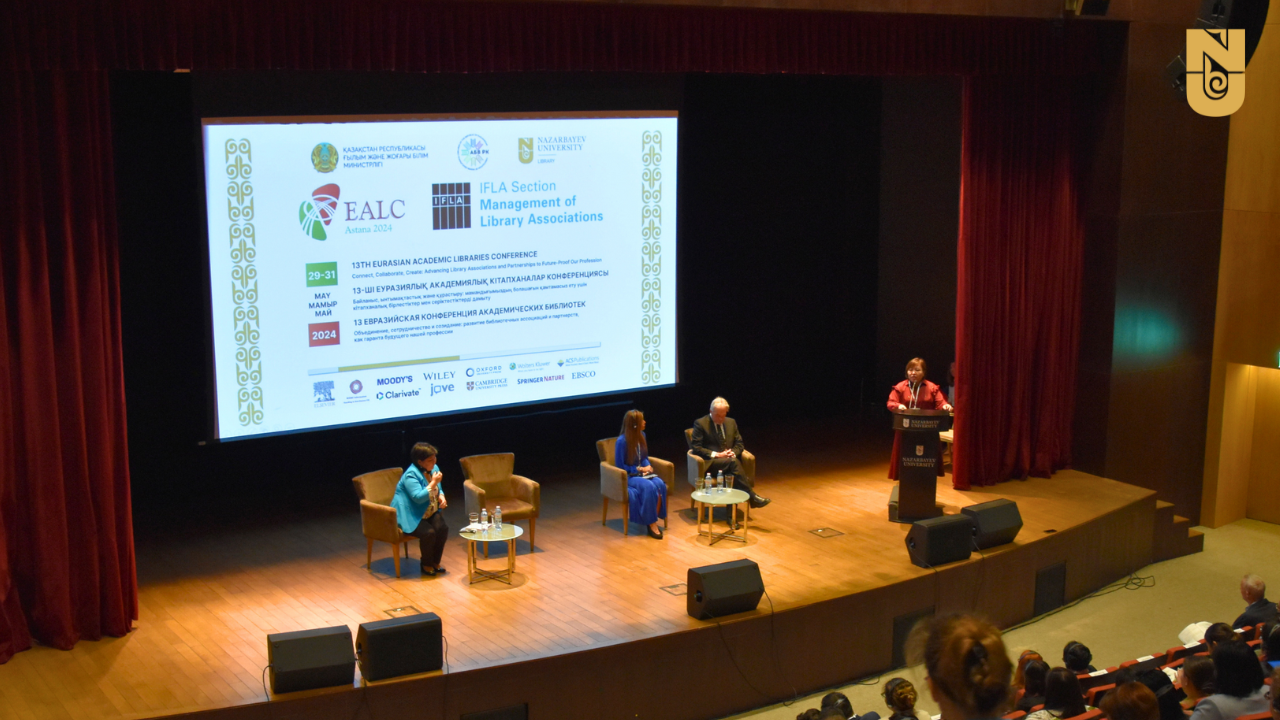
At the conclusion of the event, Anar Zapparkulova, Director of the Al-Farabi City Scientific Universal Library in Shymkent, shared her impressions: "This is my first time participating in this conference. I thought it would be just presentations about library affairs, but social issues in the context of globalization, artificial intelligence, and even the topic of domestic violence and child rearing were discussed. Also, Anar Zapparkulova shared plans to hold a seminar for Shymkent libraries: "It is well known that PhD candidates must publish in Scopus journals. Unfortunately, we can only offer works available in our database. But yesterday at the exhibition, I received links detailing how to publish in such high-ranking journals. Upon my return, I want to gather library leaders from my city and share this knowledge with them. This way, we can help increase the productivity of PhD candidates and teaching staff at regional universities."
Throughout these days, parallel workshops were held in Kazakh and English on the use of artificial intelligence in providing library and information services.
NU Library was founded in 2010 and is one of the most advanced libraries in Central Asia today. In 2018, it became one of the first university libraries to provide 24/7 access to its readers. Its collection includes around 200,000 items, including printed and electronic books, materials on microfilm and DVD-ROMs, primarily in English.